
SCOTUS Makes a Bad Call
The case of Plessy v Ferguson

The Constitution of the United States clearly outlines the powers delegated to the federal government by The People and the States, but it has no ability to enforce itself. Without people in the form of the Executive, Congress, and the Supreme Court actually enacting it, the Constitution is little more than words on paper. And people tend to “interpret” those words in their own self-interest.
The check on such interpretation is the Supreme Court of the United States, or SCOTUS. This body has the final say on whether actions are constitutional or unconstitutional. The flaw with this check is that SCOTUS also consists of people. That means that while SCOTUS is the final arbitrator, they also sometimes get it wrong … and there have been many SCOTUS decisions that were deeply flawed at best.
For example, consider the Dred Scott decision in 1857, which ruled that blacks, whether free or enslaved, were not and could not be citizens of the United States and therefore were not entitled to the rights and privileges of citizenship provided by the Constitution. This outrageous interpretation was overturned by the 13th and 14th amendments following the bloodiest war in American history.
Or Buck versus Bell in 1927, which endorsed eugenics policies and allowed for the forced sterilization of those deemed “unfit.” This one has never officially been overturned but has been rendered unenforceable by several other lesser decisions.
Or Korematsu versus United States in 1944, which upheld the internment of American citizens during WWII, placing national security over civil rights. While widely criticized and condemned, this has never been overturned and remains precedent.
But today … May 18th, 1896 … the Court rendered what some consider its worst decision ever, at least on par with Dred Scott. This one involving the case of a man named Homer Plessy.
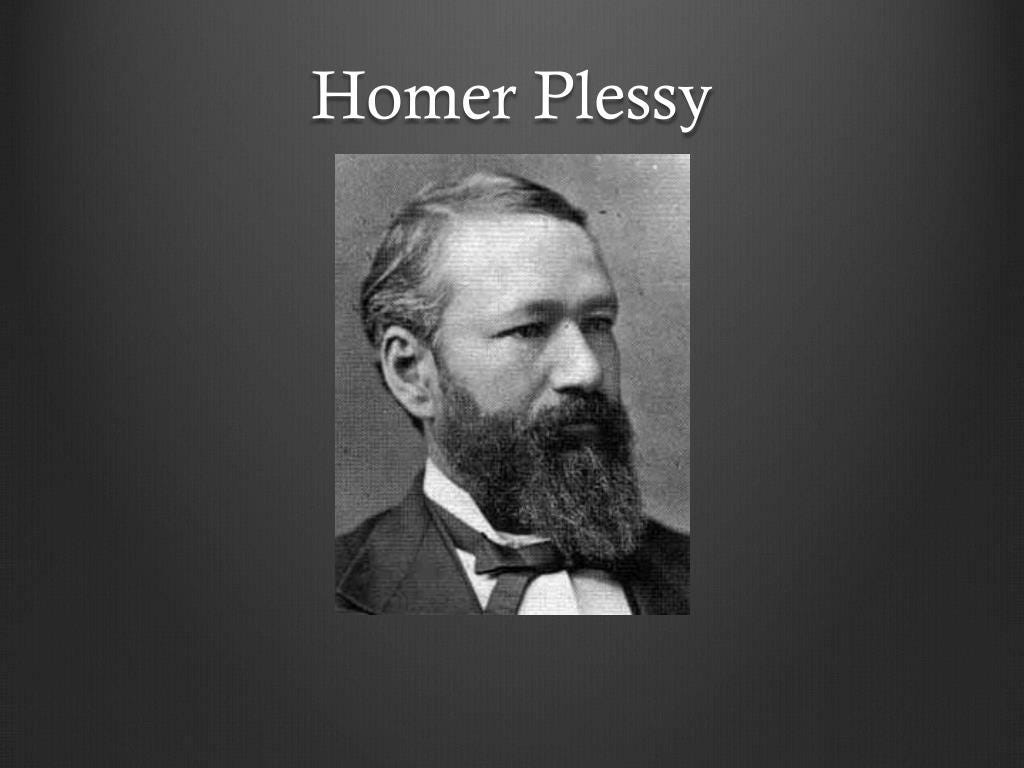
Born in New Orleans in 1863, Homer Plessy was a shoemaker by trade, and a member by birth of Louisiana’s class of free Creole people of color known as the gens de couleur. He was self-described as “seven-eighths Caucasian and one-eighth African blood,” but was nonetheless subject to Louisiana’s “Separate Car Act” of 1890, mandating that railroad passengers be segregated by race into “separate but equal” accommodations.
Plessy could easily have passed as a white man, but like many other light-complected Creoles, he chose to embrace his African ancestry and defend the rights guaranteed to blacks by the Fourteenth Amendment, which prohibited the States from denying anyone equal protection under the law. As such, in addition to being a shoemaker, he added activist to his resume.
It was the 7th of June in 1892 when Plessy bought a first-class ticket to Covington at the Press Street Depot in New Orleans. Boarding the East Louisiana Railroad’s Number 8 train, it was Plessy’s full intention to either be arrested or forced out of the “whites only” first-class car. He made a point of telling the conductor that he was “colored,” who then instructed Plessy to move to the appropriate car. Plessy then informed the conductor that he was an American citizen who had paid for his first-class ticket, and he had no intention of moving to another car. You can guess how well that went.
The conductor stopped the train, which was eventually boarded by a white detective named Christopher Cain. Plessy was placed under arrest, and then Cain … with the help of several other passengers … physically dragged Plessy off the train and hauled him off to jail, where he spent the night. Eventually, Plessy stood before criminal court Judge John Howard Ferguson accused of violating the Separate Car Act. That began a four-year legal process that would ultimately land in the Supreme Court of the United States.
Plessy wasn’t alone in his stand. He was a member of The Citizens’ Committee to Test the Constitutionality of the Separate Car Act, which helps to explain Plessy’s motivation to engage in an act of civil disobedience that could go to court and actually test the constitutionality of the separate car act. The Committee to TCSCA posted his $500.00 bond.
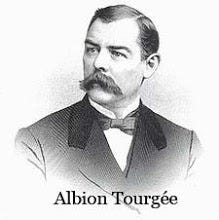
As much as Plessy and his committee wanted their day in court, local officials didn’t share the enthusiasm, and Plessy wasn’t even arraigned until four months after his arrest. But finally, he was able to make his case … or more accurately, Albion Tourgée could make his case for him. Tourgée, considered a carpetbagger in the South, was a Northern veteran of the American Civil War, lawyer and civil rights advocate from Ohio. He was recruited by the Committee to TCSCA and was paid mostly with the funds they had raised specifically for this purpose.
As this court challenge was in the Reconstruction South, it likely surprised no one that Ferguson ruled against Plessy, fining him $25.00. The case was then appealed to the Louisiana Supreme Court which, also to no one’s surprise, upheld Ferguson’s decision. However, it also granted Plessy’s petition for a writ of error, allowing for an appeal to the United States Supreme Court … which had actually been the goal all along. Finally, the case was going to be heard not by a southern court, but by America’s court.
But America’s court made a terrible decision.
Plessy’s legal team argued that the Separate Car Act violated both the Thirteenth and Fourteenth Amendments, but in a 7-1 ruling, SCOTUS ruled that while the Fourteenth Amendment established legal equality between the races, it “could not have been intended to abolish distinctions based upon color, or to enforce social, as distinguished from political, equality.” In other words, it drew a distinction between political equality and social equality. The Dred Scott decision had ruled that blacks could never be citizens, but Plessy v Ferguson had ruled that blacks could never be equal. The argument that this placed blacks into a permanent state of inferiority was dismissed by the decision as a perception “solely because the colored race chooses to put that construction upon it.”
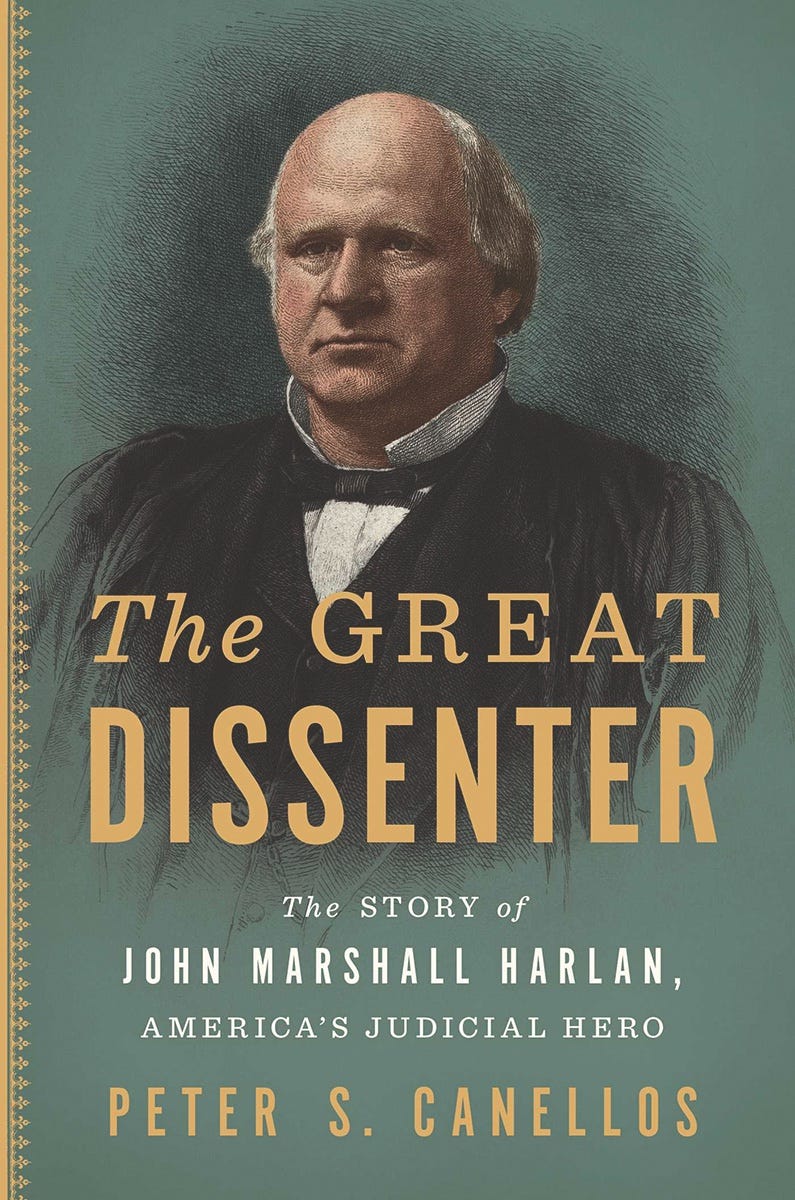
The sole dissenter (for which he became known as “The Great Dissenter”) was Justice John Marshall Harlan, who argued that the Amendments were “color-blind, and neither knows nor tolerates classes among citizens.” He predicted that the decision would reduce black Americans “to the condition of a subject race.” His dissent was prophetic, as Plessy v Fergusion provided Constitutional cover for 58 years of “separate but equal” Jim Crow laws in the South. It wasn’t until Brown v Board of Education in 1954, and the Congressional civil rights actions in the 50’s and 60’s that this stain on the Supreme Court, and the legal subjugation of blacks, was finally ended.
NEXT WEEK: The Pennsylvania/Maryland war