
Surrender at Sumter
The opening shots of the American War between the States

By the mid-1800’s a deep divide had been developing in the States. Ubiquitous in the south, slavery was being steadily abolished (though not yet completely ended) in the northern States. As the United States acquired new territories in the west, whether or not slavery would be allowed in those territories became the subject of bitter disputes. As more new territories forbade slavery, southern States deeply resented that they were not allowed to establish the “peculiar institution” upon which their agrarian economy was built, while northern States were free to establish their industrial economy in whatever territory they wished. As these territories moved toward Statehood, southern States feared that “free” States would eventually control enough of the federal government to outlaw slavery completely.
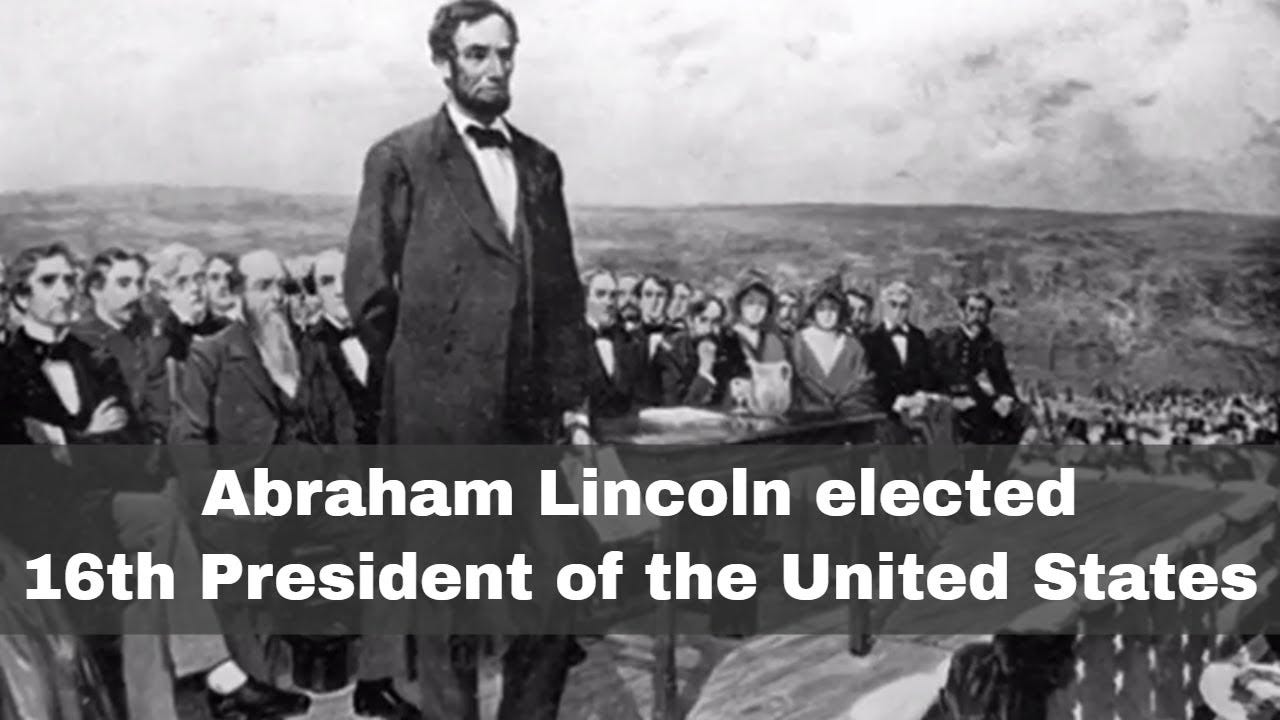
With the election of Abraham Lincoln, and the Republican party’s firm stance against expanding slavery into new territories, southern States began to secede from the Union. Lincoln, believing that they did not have the right to do so (southern States disagreed on this point), saw secession as an act of treasonous rebellion which, under the constitution, the President had the authority to put down. Slavery was undeniably the cause of southern secession, but secession was the cause of the war.
As southern States seceded, federal forts in the south became points of contention. South Carolina, the first to secede, had several federal forts in the area of the strategic Charleston Harbor. With tensions mounting, Major Robert Anderson, in command of Fort Moultrie, consolidated his forces in the most defensible federal fort in the harbor, Fort Sumter, and prepared to hold the fort until reinforcements and supplies arrived from the north. South Carolina’s governor, Francis Pickens, seized the abandoned forts and began to surround Fort Sumter. About a month later, in January of 1861, an unarmed steamer, the Star of the West, arrived at Charleston harbor with the awaited reinforcements and supplies, but turned around and sailed away when it was fired upon from the Confederate positions on the coast.
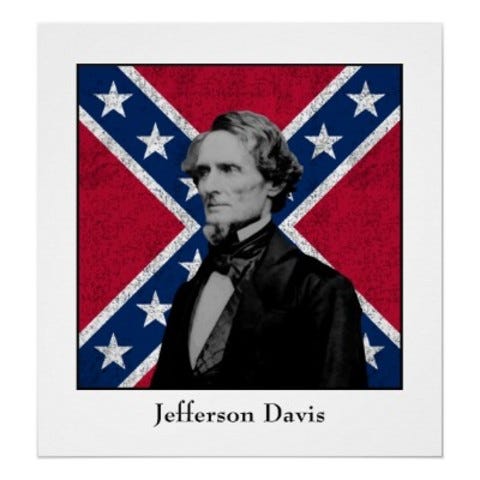
By February of 1861, six more States had seceded. Meeting in Montgomery, Alabama, the 7 seceded States organized themselves into the Confederate States of America and seized all federal forts in their States except two … Fort Pickens in Florida and Fort Sumter in South Carolina. Jefferson Davis was elected President of the new Confederacy, and negotiations began for the surrender of the two hold out forts.
Fort Sumter had been considered by Major Anderson as the most defensible of the forts in Charleston Harbor because it had been built on an artificial island with no land access. However, it had been built for the War of 1812 which ended before it was completed, so construction had stopped and it was never finished. It had been designed for 135 guns and 650 troops. Only 15 guns had been mounted, and Major Anderson was in command of a force of 127 troops. When they occupied the fort on December 26th, 1860, they had about 30 days of supplies.
It was now the 12th of April 1861.
Desperately unsupplied, Anderson and his small force were besieged by 3,000 Confederate troops and 19 artillery batteries. The day before Anderson had received another of the many Confederate requests that he surrender, which he refused, but added:
“Gentlemen, if you do not batter the fort to pieces about us, we shall be starved out in a few days.”
He did not get a few days. Early in the morning on the 12th of April, he received the following communique:
“FORT SUMTER, S.C., April 12, 1861, 3:20 A.M. - SIR: By authority of Brigadier-General Beauregard, commanding the Provisional Forces of the Confederate States, we have the honor to notify you that he will open the fire of his batteries on Fort Sumter in one hour from this time. We have the honor to be very respectfully, Your obedient servants, JAMES CHESNUT JR., Aide-de-camp. STEPHEN D. LEE, Captain C. S. Army, Aide-de-camp.”
One hour later, the Confederate batteries opened fire. The shelling of Fort Sumter continued for the next 34 hours.
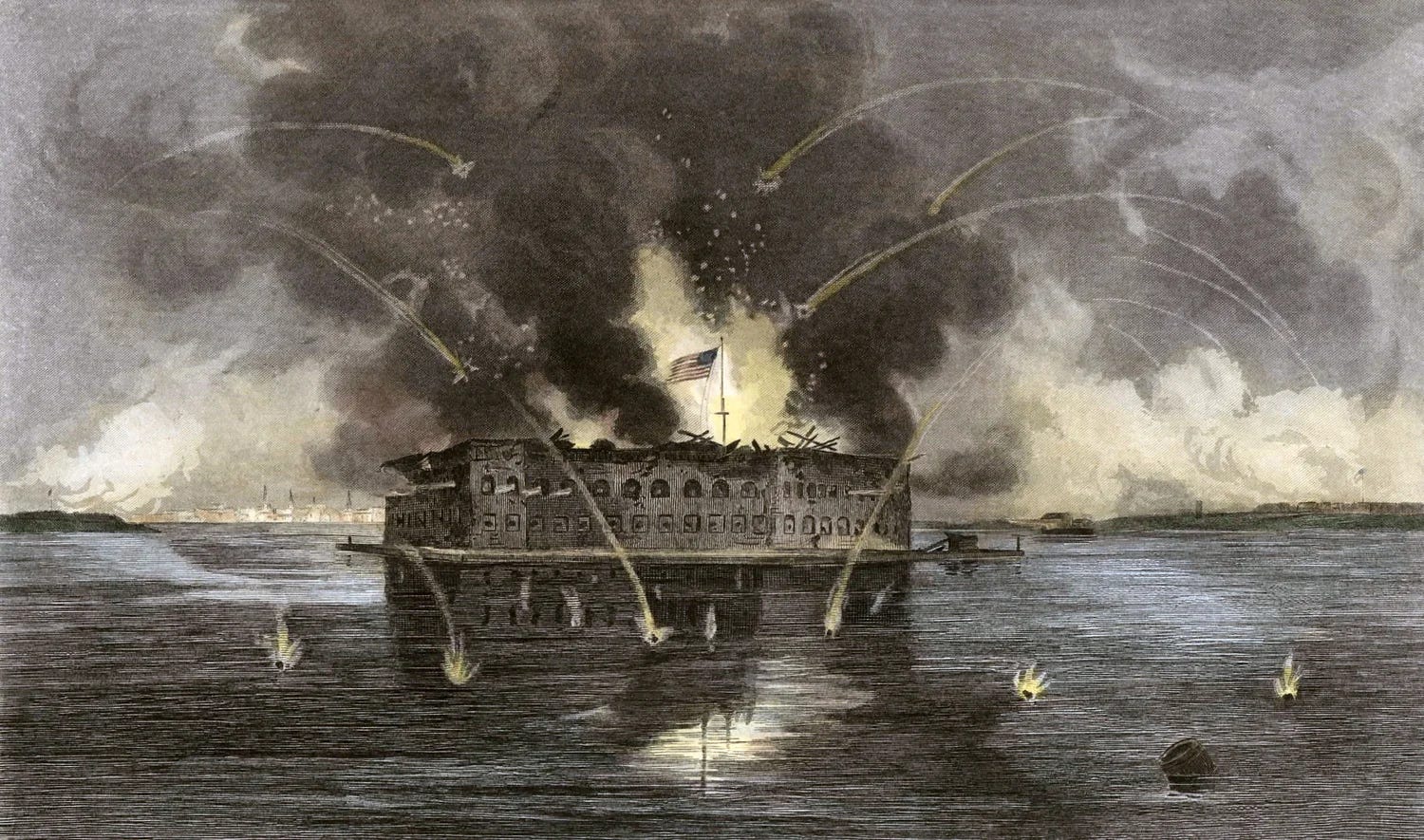
Today … April 13th, 1861 … at around noon, the fort’s flagstaff was destroyed by the barrage. An aide to General Beauregard rowed out to the fort on his own initiative to see if the fort had lowered its flag in an attempt to surrender. Anderson told him that it was battle damage, not a surrender, but during their conversation the two agreed that further resistance was futile. A makeshift flagpole was erected, and Anderson hoisted the white flag of surrender.
Miraculously, after an intensive 34-hour barrage, there were no casualties on either side, save for one Confederate horse (it may have been a mule) killed by defensive fire from the fort. The Confederates allowed the fort’s defenders to leave and return north and even permitted them to fire a one-hundred-gun salute. Unfortunately, during the salute, two of Anderson’s men were killed by misfires.
The action at Fort Sumter is widely considered the first shots fired in American’s War between the States, though it’s more accurate to say that the first shots of the war were when the Confederates fired on the Star of the West back in January as it attempted to reinforce and resupply the fort. The surrender of Fort Sumter was, however, the first casualties of the war, when two Union soldiers were killed by friendly fire during the surrender.
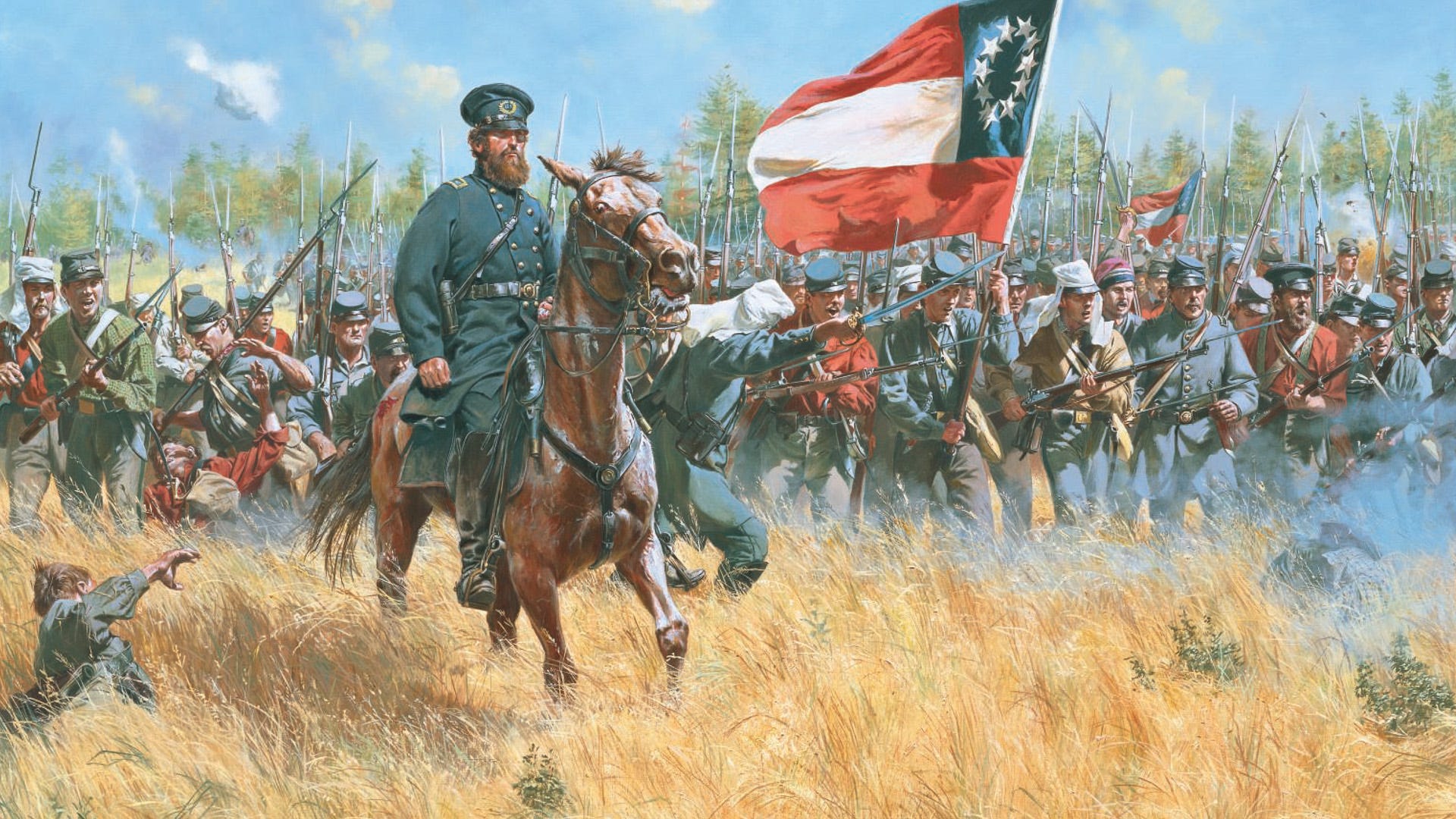
But the relatively bloodless barrage of Fort Sumter was not indicative of the horror of the war that began there. A few months later in July would see the first major engagement of that bloody war at what the Union called the Battle of Bull Run, known to the Confederate side as the Battle of Manassas. This battle would result in nearly 2,000 Confederate casualties, and nearly 3,000 Union casualties, resulting in a decisive Confederate victory that routed the defeated Union army. Fortunately for the Union, the Confederates had been unprepared for victory and were unable to follow up on their surprise win. If they had been able, they might have taken Washington, D.C.
Major Anderson took the 33-star American flag that had flown over Fort Sumter with him when he returned north, where he was promoted to brigadier general and was treated as a national hero. He and the flag went on a very successful recruiting tour raising troops to fight the Confederacy. Four years later, they both returned to the battered-but-recaptured Fort Sumter, and in a ceremony on April 14th, 1865, raised the same flag over Fort Sumter once again.
Only a few hours after Anderson raised that flag in victory, President Abraham Lincoln was assassinated.
NEXT WEEK: The Colorado Coalfield War